The concept of remote machines isn’t new for me. I have been using ssh for a while to use a second laptop from my primary device for more memory and storage.
I have interacted with Azure and AWS VMs, but I never saw them as a way to access more memory or storage but I do now.
Networking is kind of amazing, and the combination of machines and networking has enabled me to view software from a different POV. I’m thinking more in terms of memory and CPU consumption than the software I saw.
I’ve been an ubuntu user for a couple of years, but i now know why Linux is a powerful and amazing piece of software that I have a lot of respect for.
The fact that i can ssh into a machine running Azure or AWS, start a tmux server, run an opencode or codex session, prompt it, and just close my laptop, and it would still be going. That was the first inflection point into the rabbit hole and madness of multi-machines. And running so many tmux and agent sessions, linux just handles it smoothly at the end!
Now machines are getting expensive, and before I could get my hands on hardware with probably lots of memory and storage, it got expensive, so it was time to get clever and look for something else.
I was lucky to find a couple of VMs (through a friend!)…the storage is limited, but i get a 24/7 running machine with decent memory.
I did the most obvious thing to set up hermes agent (interesting way of burning up your tokens) and tried to get it to orchestrate/automate a few tasks. It’s useful for reminders, and I wish I liked its orchestration more.
But then I decided to push it further with the two laptop devices and a couple of VMs, putting all of them together into a private tailscale network and using a Discord channel for projects to start a thread for a new task. It was kinda cool, but at that time, I was on an opencode go sub (game changing btw) and working with glm 5.1, and minimax m3 felt limiting.
My setup for a while was using multiple tabs and groups (for each machine) inside warp terminal (cmux wasn’t available for Linux). tmux session running inside each project tab, I could spin up multiple agent sessions across many devices for multiple projects from one device, and they would still be running even if i close my laptop (all machines except mine!!)
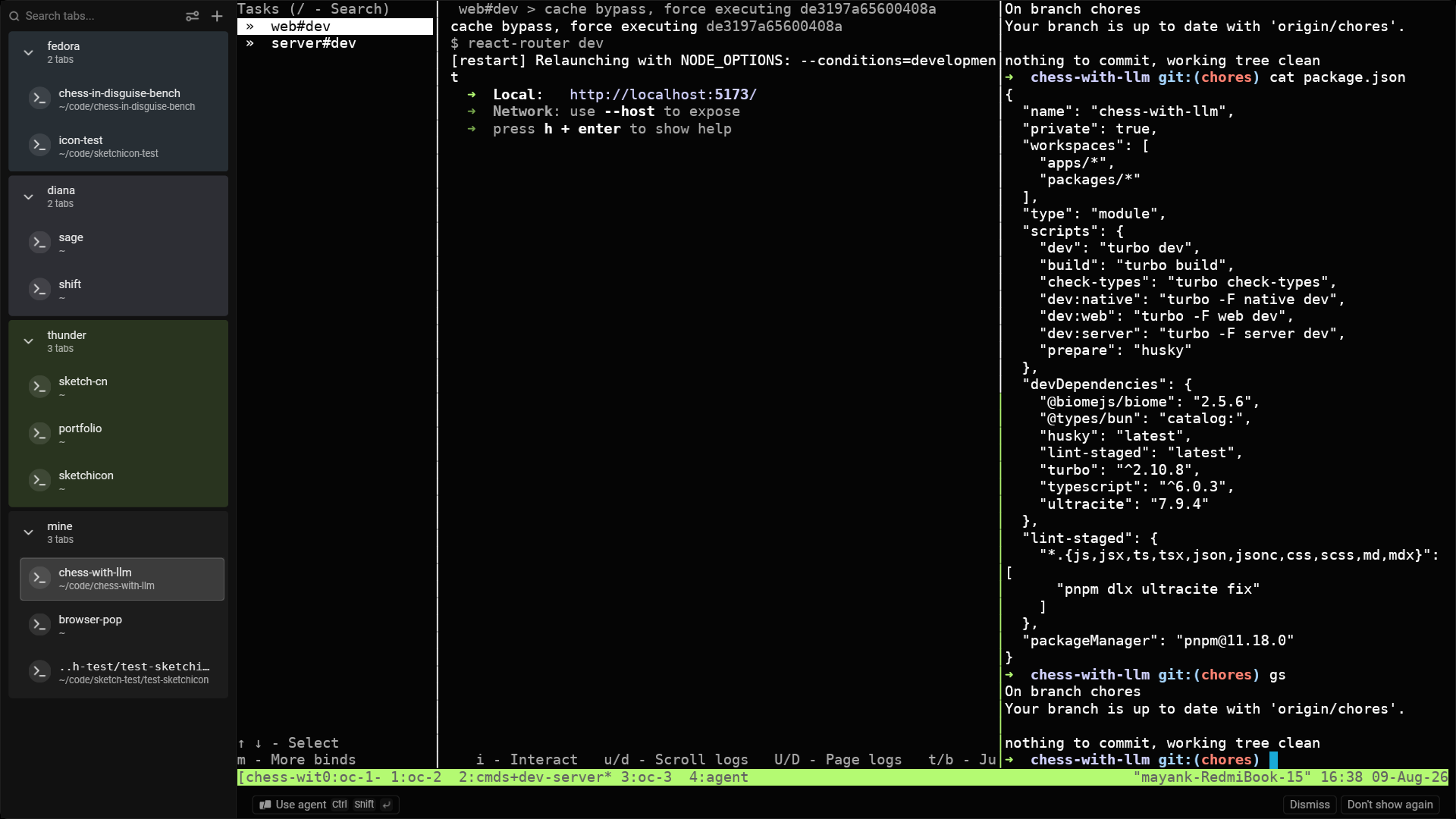
This workflow became more powerful with codex subs (thanks to my friends!)…i was able to work on lots of different stuff, ones that i won’t dare to touch a few months before. CLIs, npm packages, desktop apps, eval benchmarks, going deep into the woods for daemon processes, debugging performance and a lot more. I felt more involved with linux, OS processes and much more networking stuff!
terminal, however, doesn’t feel like a good place to manage these diff kinds of workflow (limiting with both images and text). i’ve been interested in codex app interface and t3 code for a while! Remote machine setup in t3 code meant i could have the same setup outside my terminal with a much better interface (one that allows me to copy-paste screenshots).
t3 connect seemed exciting to replace tailscale + tmux setup, but recently i found a new agent IDE, it’s called bb. and it has kind of a different philosophy to not just an agent interface, but as software. The interface is programmable, allowing developers/agents to build the IDE they want.
that’s an interesting and unique way to build software. instead of thinking in terms of building a fixed version with a defined set of features, building the primitives and keep it customizable or programmable so two installed versions could look very different, and it’s not just theme or fonts or design, it’s literally diff interfaces that are specifically built as per someone's liking.
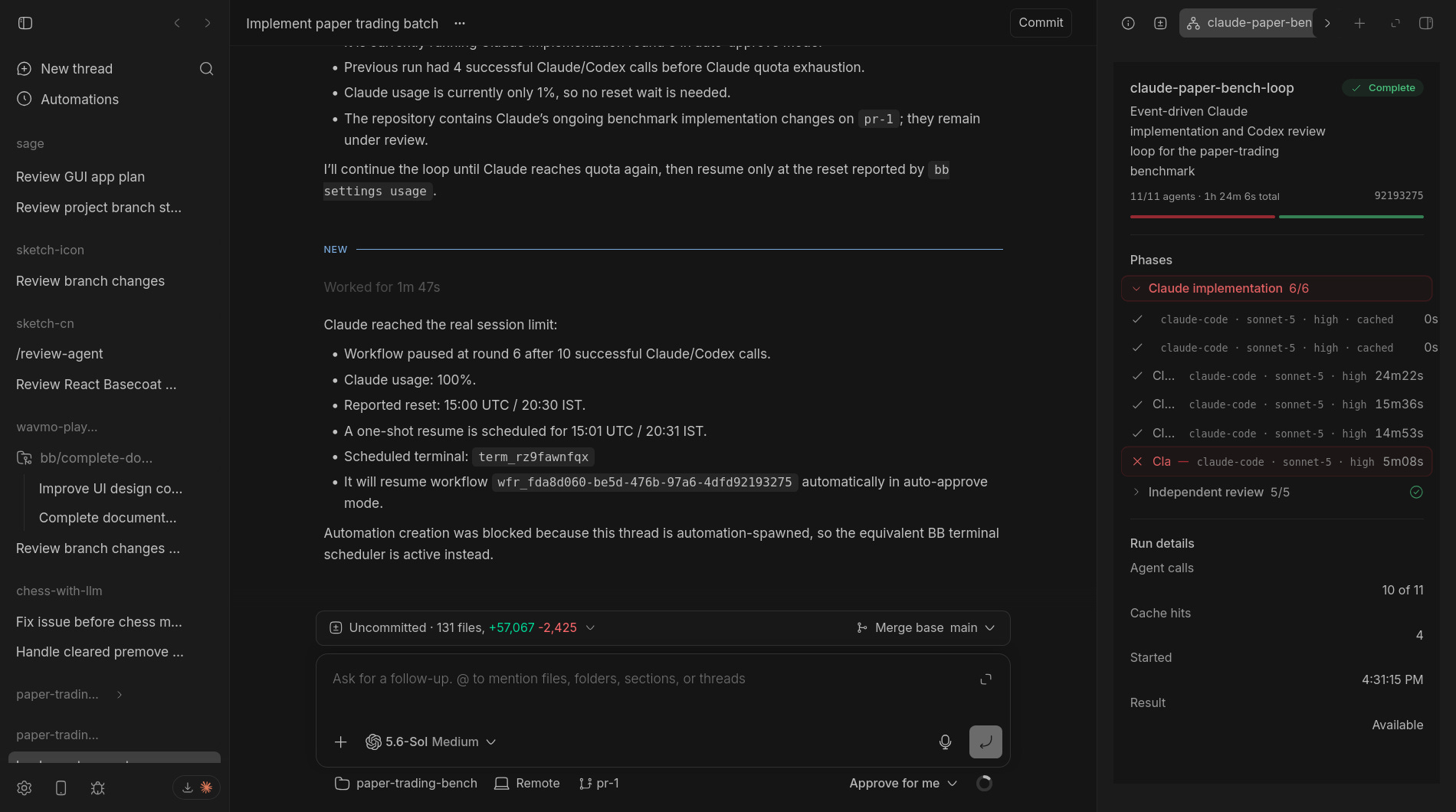
mine look very simple for now.
in short, bb-app and bb connect have been amazing to use…as for my setup, i now have a custom domain that i can log into any time with github (thanks to getbb.app), the primary daemon for bb running on a VM that is connected to other machines, any machine that is running (has bb’s daemon process). I can use a direct agent to execute a task on that machine.
apart from other stuff that bb allows for (parent and child threads, plugins, automations, agent spawning and interacting with other threads), the whole philosophy of letting the IDE build itself was kinda exciting and got me to rethink software from a different perspective.